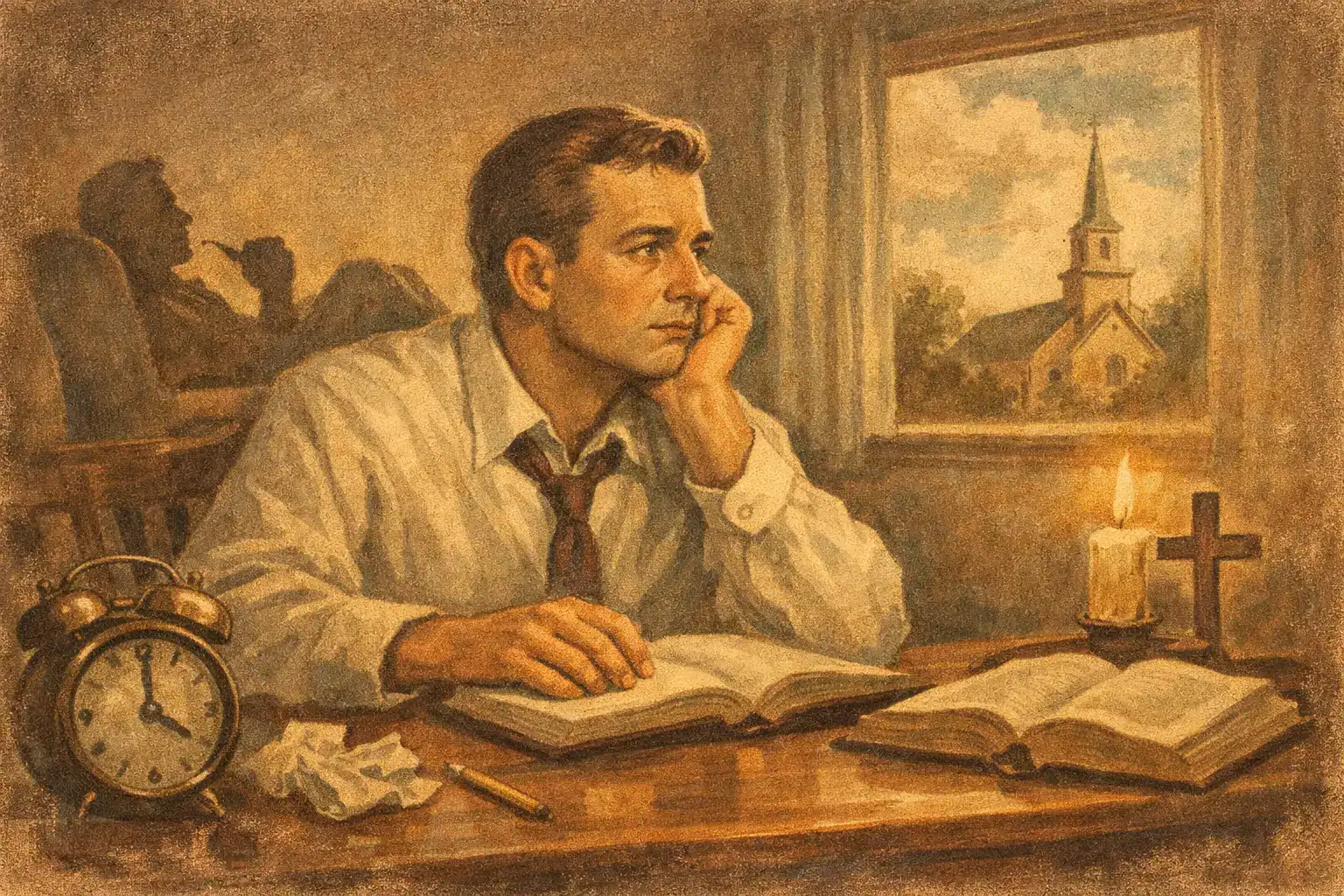
A marriage rarely drifts into strength by accident.
It is shaped in the ordinary moments: how a husband responds when his wife is disappointed, whether he puts down his phone when she begins to speak, whether he carries tension into the home or brings it honestly before God. Godly husband habits are not a performance of religious leadership. They are repeated acts of love, self-command, humility, and faithful responsibility.
A Christian husband is not called to dominate his household or to appear as though he has no weaknesses. He is called to love in a way that reflects Christ: sacrificially, truthfully, and with steadfast care. That calling reaches beyond Sunday worship. It affects his calendar, his speech, his work, his prayer life, his money, and the atmosphere he creates at home.
1. Begin the day under God’s authority
The first battle of leadership is often fought before your first cup of the day. A man who wakes and immediately submits himself to the distractions of noise, notifications, pressure, and unfinished tasks, will carry that scattered spirit through the rest of the day. A brief, deliberate morning rhythm creates a real place to start well.
Read a portion of Scripture. Pray plainly. Give thanks for your wife and ask for the grace to serve her well. This doesn’t need to become some overly elaborate routine that collapses the first busy morning you have. Ten to twenty sincere minutes of prayer and attention can be more formative than some ambitious plan you abandon after a few days.
Of course, the purpose is not to try and earn God’s favor. It is to remember whose you are before you attempt to lead, provide, solve, or achieve anything. A husband who receives his identity from Christ is less likely to demand that his wife carry the burden of constantly affirming him.
> A brief, deliberate morning rhythm creates a real place to start well.
2. Give your wife your full attention
Being present is one of the most practical forms of love. Many husbands are physically in the house but mentally still at work, online, or rehearsing tomorrow’s problems. A wife can feel the difference between being heard and being managed.
When she speaks, resist the reflex to correct, diagnose, or fix the issue before you understand it. Ask another question. Put the phone away. Look at her. If you truly need a few minutes to transition from work to family life, say so clearly and honor the time you promise.
This does not mean that a husband must process every thought immediately or abandon his necessary rest. It means he refuses to make distraction his default posture. Faithful attention says to her: “You matter to me, and I want to understand.”
3. Lead through service, not control
Biblical headship is often misunderstood because men confuse leadership with getting their way. Christ’s pattern is not self-protection, intimidation, or passive withdrawal. He gives Himself for the good of His people. That makes a husband’s authority inseparable from responsibility and sacrifice.
Look for burdens you can carry without being asked. Take ownership of a difficult conversation, an overdue repair, a family decision, or an area of disorder you have ignored. Be decisive when decisions are needed, but do not treat your wife’s wisdom as a threat to your role. A strong home is not built by one person silencing the other. It is built by a husband who listens carefully, acts courageously, and seeks the good of the whole household.
There will be seasons when work demands more, children are small, health is strained, or finances are tight. Service will not look identical in every season. The question remains constant: am I using my strength to make my wife’s life more secure, ordered, and loved?
> Husbands, love your wives, just as Christ loved the church and gave himself up for her to make her holy, cleansing her by the washing with water through the word, and to present her to himself as a radiant church, without stain or wrinkle or any other blemish, but holy and blameless. In this same way, husbands ought to love their wives as their own bodies.
- Ephesians 5:25-28
4. Practice quick and specific repentance
A husband who cannot admit wrong eventually makes everyone around him pay for it. Defensiveness may feel like strength in the moment, but it weakens trust over time. Your wife does not need a flawless man. She needs a man whose conscience is alive and whose pride does not rule the home.
When you sin against her, name it without softening it. “I spoke harshly. That was wrong. Please forgive me.” Avoid the hidden excuse: “I am sorry, but you also…” Repentance does not erase the need to address a difficult issue later. It simply refuses to use the issue as a shield against your own responsibility.
This habit changes the culture of a family. Children learn that authority can be humble. A wife gains confidence that conflict does not have to become contempt or silence. And a husband becomes freer because he is no longer spending energy defending an image he cannot sustain.
5. Guard your words when pressure rises
The truest test of a man’s speech is not how he talks when life is easy. It is how he speaks when he is tired, embarrassed, frustrated, or afraid. Sarcasm, contempt, raised voices, and cutting jokes can leave wounds that outlast the argument that produced them.
Build a pause between feeling and speaking. If anger is rising, say that you need a moment and return to the conversation when you can speak with self-command. Do not use withdrawal as punishment. Make a clear promise to come back, then keep it.
Gentleness is not weakness or avoidance. A godly husband can say hard things, set boundaries, and confront destructive patterns. But he does so without cruelty. His words should make truth easier to receive, not turn every disagreement into a contest for power.
6. Protect the marriage from hidden compromises
Faithfulness is more than avoiding obvious infidelity. It includes refusing the private habits that erode trust, distort desire, or create a secret life. Pornography, flirtatious messages, concealed spending, emotional intimacy with someone outside the marriage, and habitual dishonesty all work against a love built in covenant.
Bring darkness into the light early. If a pattern has gained ground, do not wait until discovery forces a confession. Seek pastoral care, wise accountability, or professional support where needed. Courage is not pretending you can manage every temptation alone. Courage is taking decisive action before a private compromise becomes a public wound.
This also means protecting time for your marriage. Work can be a worthy calling, but it can become an excuse to avoid the more vulnerable work of love. Provide for your family without making provision the only form of care you offer.
7. Build shared rhythms of prayer and gratitude
A husband cannot force his wife into a particular spiritual temperament. Some couples pray easily together; others need to rebuild that practice slowly after years of awkwardness, disappointment, or spiritual distance. Start where honesty allows.
Pray for one another before sleep. Give thanks for one specific grace at dinner. Attend worship faithfully and let the life of the Church shape the life of your home. These rhythms create a place where those conversations can be held before God rather than fought alone.
If your wife is carrying sorrow, anxiety, or weariness, do not offer prayer as a way to end the discussion. First listen. Then ask if she would welcome prayer. She will appreciate you more for it.
8. Bring order to your energy, work, and finances
A man’s spiritual intentions are tested by his everyday life. Chronic disorganization, unmanaged debt, neglected health, and endless work stress do not stay in separate compartments. They spill into the marriage.
Take responsibility for your energy levels. Sleep enough to be patient. Move your body. Limit the habits that make you dull, reactive, or unavailable. Review your finances with honesty, make a plan with your wife, and address avoidance before it becomes a crisis. No need for perfection or control. Maintaining order is about becoming trustworthy in the responsibilities God has placed before you.
At Pure Life Mastery, this kind of whole-life alignment is central: faith, relationship, energy, and impact belong together. A husband who wants to strengthen his marriage should not ignore the practical patterns that continually drain his capacity to love.
9. Choose faithfulness over grand gestures
Anniversaries, gifts, and planned getaways have their place. But a strong marriage is usually sustained by less dramatic choices: coming home when you said you would, keeping a promise, initiating a needed conversation, doing the next right task, and extending kindness when no one is applauding.
Legacy is formed this way. Years from now, your wife may not remember every achievement from your career, but she will remember whether she felt safe with you, respected by you, and cherished in the ordinary life you shared. Your children will remember what your leadership looked like when nobody outside the home was watching.
Ask God for one habit to practice this week, not nine at once. Then practice it until it becomes part of your character and values. The faithful husband is formed, day by day, into a man whose home receives the steadiness, sacrifice, and love he has first learned to receive from Christ.
You do not have to lead your home on your own. A free coaching call with Pure Life Mastery gives you a place to talk through which habit needs your attention first and a plan for building it into your week. Bring your marriage, your specific struggle, and the habit you want to strengthen most. Visit www.purelifemastery.com/free and reserve your call today.