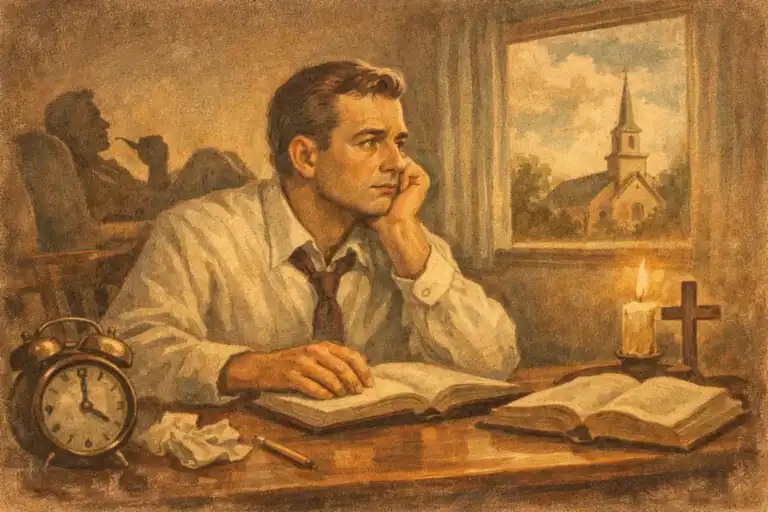
Do you keep pushing important things off for the right time?
And the right time never comes.
A man can be sincere in prayer, faithful to his family, committed to his work, and still keep postponing the very responsibilities God has placed before him. So, why do Christian men procrastinate? Usually, it is almost never because they are lazy or because their faith is out of order. Procrastination is often a signal that something beneath the surface needs attention. These are often things such as; fear, confusion, exhaustion, perfectionism, or many times a reluctance to face something uncomfortable.
For a Christian man who wants to lead well, build a strong household, do meaningful work, and leave a godly legacy, delay is rarely a small issue. It slowly steals peace, weakens trust in your own word, and turns clear opportunities into sources of guilt. The answer is not to condemn yourself more harshly. It is to bring the pattern into the light, understand what is driving it, and take the next faithful step.
Why Do Christians Procrastinate Even When They Care?
The difficult truth is that caring deeply about a goal does not automatically lead to action. The truth is, the things that matter most can be the easiest to avoid, BECAUSE they are important. Starting the business idea may expose you to failure. Having the needed conversation with your wife may expose weakness. Creating a financial plan may reveal how disorganized and out of control things have become. Returning to prayer and Scripture may confront you with an area of life you have kept hidden away, promises broken, and callings unanswered.
Procrastination offers the illusion of temporary relief. You tell yourself you will handle it after this busy week, when you feel more confident, or once conditions improve. For a few moments, the pressure feels like it drops. But the task remains, and delay adds another burden: self-doubt.
A Christian understanding of the person helps us see the whole picture. We are not merely minds trying to make efficient decisions. We are embodied souls with habits, fears, attachments, wounds, duties, and desires. If your internal life is disordered, a calendar app alone will not solve the problem. Practical systems matter, but they must work alongside raw spiritual and emotional honesty.
Fear Often Wears the Mask of Delay
Many capable men procrastinate because they are afraid of getting it wrong. They may not call it fear, instead they might call it research, preparation, discernment, or waiting for the right moment. It is deceptive because each of those things has a rightful place. But they can become respectable names for avoidance.
Discernment seeks wisdom so that a man may act faithfully. Avoidance constantly seeks more certainty so that he never has to risk acting at all.
Consider the difference.
- A man who is discerning about a career change may pray, seek counsel, review the financial realities, and set a date to make a decision.
- A man who is avoiding the decision repeats the same research for months while telling himself he is being prudent. The issue is not that he lacks information. He is trying to eliminate the possibility of discomfort.
God does not ask us to control every outcome before we obey. He asks for faithfulness with what has been entrusted to us. That may mean making the call, setting the boundary, applying for the role, opening the budget, or beginning the work before you feel fully ready.
> You have everything you need to take the next step. And will be prepared for the step after that.
Perfectionism Can Be a Form of Pride
Perfectionism sounds like a high standard, but it almost always produces low output. A man who believes every effort must be exceptional may struggle to begin anything that could reveal ordinary limitations. He delays the sermon outline, the proposal, the workout plan, or the difficult project because the first attempt will not match the ideal in his mind.
This is not humility. Humility accepts that we are creatures, not God. We learn, practice, make corrections, and depend on grace. The demand to perform perfectly can become a subtle attempt to protect an image of ourselves as competent, respected, or beyond reproach.
> Michelangelo’s reported last words at age 88 were “Ancora imparo,” which translates from Italian to “I am still learning.”
Faithful action is often unglamorous. It is the first imperfect draft. It is a ten-minute walk after months of neglecting your health. It is admitting to your spouse that you have been distant. It is beginning again after failure without making a dramatic display of shame.
The standard is not flawless performance, but rather faithfulness. As Christ teaches in the parable of the talents, we are accountable for what we do with what we have been given. Burying a gift because we fear an imperfect result is still burying it.
When I used to train boxing, I would notice that the person who was less talented but trained every day would certainly beat the person who was much more talented but only showed up once a week.
Spiritual Fatigue Makes Ordinary Duties Feel Heavy
Not all procrastination is rooted in fear or pride. Sometimes a man is just depleted. He has spent months carrying pressure at work, tending to family needs, managing conflict, or quietly fighting discouragement. His sleep has suffered. His prayer has become rushed. His mind is scattered by constant notifications, unfinished obligations, and a lack of genuine rest.
When this happens, even small tasks can feel strangely difficult. The solution is not always to push harder. Sometimes it is to restore order.
A faithful life requires rhythms of work, prayer, rest, nourishment, and attention. If your body is worn down, your emotions are unaddressed, and your spiritual life has become an afterthought, your capacity for decisive action will shrink. This is not an excuse to remain stalled. It is an invitation to address the conditions that keep you stalled.
Ask plainly: Am I avoiding this task, or am I genuinely exhausted? The answer determines the next step. Avoidance may require courage and accountability. Exhaustion may require a more sustainable schedule, better sleep, a conversation with a trusted person, or professional support for anxiety or depression. A disciplined man does not ignore his limits. He takes responsibility for them.
Disordered Priorities Create Constant Delay
A day can be full of tasks without being fruitful. If every hour is claimed by other people’s demands, social media, reactive email, and low-value tasks, the work that matters most will always be pushed to the edge.
Procrastination is often less about refusing to work and more about refusing to choose wisely. Without clear priorities, the urgent wins by default. You answer another message, complete another small task, and promise yourself that tomorrow will be different. Tomorrow rarely changes until you decide what deserves your protected attention today.
This calls for an honest look at the four domains that shape a whole life: Faith, Impact, Relationship, and Energy . A delayed task in one domain can spill into the others. Neglecting your health drains your energy for work. Neglecting your marriage clouds your focus. Neglecting prayer makes it easier to let anxiety direct your decisions. A scattered life needs more than a better to-do list. It needs a clear order of loves and responsibilities.
A Faithful Way to Start Moving Again
Begin smaller than your pride prefers. Do not wait for a perfect Monday, a free weekend, or a surge of motivation. Choose one responsibility you have been avoiding and give it a defined first step that can be completed today.
A small daily commitment is often enough to break the spell of delay. Put your phone away. Write down the task you are avoiding. Name the real reason it feels difficult. Then identify the next visible action, not the entire project. If you have avoided your finances, the action may be opening the bank statement. If you have avoided a job search, it may be updating the first section of your resume. If you have avoided a hard conversation, it may be setting a time to speak.
Before you begin, pray simply and honestly. Ask God for clarity, courage, and the willingness to be faithful in the present moment. Prayer should not become another way to postpone action. It prepares the heart to act with the right posture: dependent on God, responsible for your choices, and free from the need to guarantee the result.
Then create a structure that supports follow-through. Put the next step on your calendar. Tell a trusted brother, mentor, or coach what you will complete and when. Reduce the distraction that has repeatedly pulled you away. At Pure Life Mastery, this kind of change is treated as a whole-life process, because lasting action grows from renewed mindset, emotional steadiness, spiritual order, and practical systems working together.
Stop Treating Delay as Your Identity
You may have procrastinated for years, but you do not need to keep calling yourself a procrastinator. Labels can become permissions. They tell you that delay is simply who you are, rather than a pattern you can confront with truth, repentance where needed, and disciplined practice.
God has given you a life to steward, not merely endure. Your work, health, relationships, and spiritual responsibilities will not all be solved at once. Nor should they be. But one honest decision, followed by one concrete action, can begin restoring integrity between what you say matters and how you live.
The task you have avoided may still be difficult. Do it faithfully anyway. A life of purpose is not built by waiting until fear disappears. It is built when a man places his next step before God and takes it.
You do not have to break this pattern alone.
A free coaching call with Pure Life Mastery gives you a place to name what you have been avoiding and get direction on the next step. Bring your questions and the task you keep pushing off. Visit www.purelifemastery.com/free and reserve your call today.